
Bangla PDF books of Horror Books. Bengali pdf ebook download. All books of Horror Books download in PDF file. Collection of pdf Bangla ebook. Bangla books of Horror Books. Free download Horror Books's book or read online. Download Short Stories Books for FREE. All formats available for PC, Mac, eBook Readers and other mobile devices. Large selection and many more categories to choose from.
| Part of a series on the |
| Paranormal |
|---|
Reportedly haunted locations: |
A bhoot or bhuta (Sanskrit: भूतbhūta) is a supernatural creature, usually the ghost of a deceased person, in the popular culture, literature and some ancient texts of the Indian subcontinent.[1] Interpretations of how bhoots come into existence vary by region and community, but they are usually considered to be perturbed and restless due to some factor that prevents them from moving on (to transmigration, non-being, nirvana, or heaven or hell, depending on tradition). This could be a violent death, unsettled matters in their lives, or simply the failure of their survivors to perform proper funerals.[1]
The belief in ghosts is deeply ingrained in the minds of the people of India across generations. The various concepts of ghosts trace their roots in the vast bodies of Hindu mythology, its religious texts, literature and folktales. There are many allegedly haunted places in India, such as cremation grounds, dilapidated buildings, royal mansions, forts, forest bungalows, burning ghats, etc.. Ghosts also occupy a significant place in the Bengali culture. Ghosts and various supernatural entities form an integral part of the socio-cultural beliefs of the both Hindu and Muslim communities of rural Bengal. Fairy tales often use the concept of ghost and references to paranormal activities are found amply in modern-day Bengali literature, cinema, radio and TV programmes.
Etymology and idiom[edit]
Bhūta is a Sanskrit term that carries the connotations of 'past' and 'being'[2] and, because it has connection with 'one of the most wide-spread roots in Indo-European — namely, *bheu/*bhu-', has similar-sounding cognates in virtually every branch of that language family, e.g., Irish (bha), English (be), Latvian (but) and Persian (budan).[3][4]
In Hindi, Punjabi, Kashmiri, Bengali, Sindhi and other languages of the northern subcontinent, the concept of bhoots is extensively used in idiom. To be 'ridden by the bhoot of something' (bhoot sawaar hona) means to take an obsessive interest in that thing or work unrelentingly towards that goal. Conversely, to 'dismount a bhoot' (bhoot utaarna) means to break through an obsession or see through a false belief that was previously dearly held.[5][6] 'To look like a bhoot' (bhoot lagna) means to look disheveled and unkempt or to dress ridiculously. A house or building that is untidy, unmaintained or deserted when it should not be is sometimes pejoratively called a bhoot bangla.[7] The word has also entered Javanese language of Indonesia through Sanskrit, it is pronounced buta and generally refers to a malevolent spirit/demonic giant which haunts places, it also refers to the genre of evil giants in wayang stories such as Buta Cakil.
Characteristics of bhoots[edit]
Bhoots are able to alter and assume forms of various animals at will, but are usually seen in human form.[8] However, their feet often reveal them to be ghosts, as they are backwards facing.[9] As the earth is regarded as sacred or semi-sacred in many traditions of the Indian subcontinent, bhoots go to lengths to avoid contact with it, often floating above it, either imperceptibly or up to a foot above.[9]Bhoots cast no shadows, and speak with a nasal twang.[10] They often lurk on specific trees and prefer to appear in white clothing.[11] Sometimes bhoots haunt specific houses (the so-called bhoot banglas, i.e. bhoot bungalows), which are typically places where they were killed or which have some other significance to the bhoot.[12]
Many ghost stories in the region combine these elements. For instance, they might involve a protagonist who fails to flee or take countermeasures when they run across a bhoot. Instead, they unwittingly accept the bhoot's companionship (e.g., makes the ghost a companion as he/she walks through a forest, picks up the ghost in his car because it looks like an attractive woman waiting by the roadside at night). They become progressively aware that their companion is dressed entirely in white and has a funnily nasal voice, before the horrifying realization dawns on them that their companion's feet are turned backwards, or he/she is not casting a shadow in the moonlight, or is walking without actually touching the ground. Bhoots are said to seek out milk and immerse themselves in it. Consuming bhoot-contaminated milk is considered a typical route for bhoot-possession of humans, which has also been a frequent plot element in bhoot stories.[10]
A particular kind of bhoot, that of a woman that died during pregnancy or childbirth, is known as a chudail (dakini in Nepal and eastern India). Chudails look like human women, but their feet are turned backwards or other features are turned upside down. They can change their forms at any time. Chudails often try to lure young men at road crossings and fields or similar places. If a man is enamored of a chudail, it is believed that she will cause his death. There are, however, stories of people living with a chudail, or even marrying one.
Thwarting bhoots[edit]
In many regions, bhoots are supposed to fear water and steel or iron objects, so keeping those nearby is believed to scare them off.[13] The scent of burnt turmeric is also said to ward them off.[10] As is typical of ghosts throughout the world, invoking the name of holy figures and deities is also said to repel bhoots. In some regions, sprinkling earth on oneself is said to shield against bhoots.[14]According to Hindu mythology, the soul cannot be destroyed by any means. As a bhoot is just a deceased, lost, or angry soul, the Hindu exorcists do not (or cannot) destroy them, but in turn performs a ritual according to the Atharva Veda called atma-shanti which is just a modified shraadh (death anniversary) done by those haunted by the bhoot to promise it that everything in the power of them would be done to either assure the rebirth of the bhoot or finish the works left incomplete by the bhoot (or both).Thus the bhoot gets what it wants and would stop troubling those haunted by it forever.[15]
Bhutas[edit]
The Bhutas, spirits of defied heroes, of fierce and evil beings, of Hindu deities and of animals, etc., are wrongly referred to as 'ghosts' or 'demons' and, in fact, are protective and benevolent beings. Though it is true that they can cause harm in their violent forms, as they are extremely powerful, they can be pacified through worship or offerings referred to as Bhuta Aradhana.[16]
See also[edit]
- Preta, vetala and pishacha
References[edit]
- ^ abBritannica; Dale Hoiberg; Indu Ramchandani (2000), Students' Britannica India, Volumes 1-5, Popular Prakashan, 2000, ISBN978-0-85229-760-5,
.. Bhut also spelt bhoot, in Hindu mythology, a restless ghost. Bhoots are believed to be malignant if they have died a violent of premature death or have been denied funerary rites ..
- ^Henk W. Wagenaar; S. S. Parikh; D. F. Plukker; R. Veldhuijzen van Zanten (1993), Allied Chambers transliterated Hindi-Hindi-English dictionary, Allied Publishers, 1993, ISBN978-81-86062-10-4,
.. bhūt भूत (m.) a ghost; an evil spirit; .. the past tense (also bhūtkāl भूतकाल); (adj.) past, bygone ..
- ^Leon Stassen (2003), Intransitive Predication: Oxford Studies in Typology and Linguistic Theory, Oxford University Press, 2004, ISBN978-0-19-925893-2,
.. one of the most wide-spread roots in Indo-European - namely, *bheu/*bhu-. This root, which can be found in practically all branches of the family .. Welsh bod, Irish bha, Scottish Gaelic ba; English be .. Latvian but .. Russian byt' .. Modern Persian budan; Vedic bhu- ..
- ^William H. Snyder (2001), Time, Being, and Soul in the Oldest Sanskrit Sources, Global Academic Publishing, 2001, ISBN978-1-58684-072-3,
.. derived in Sanskrit from the two verb roots (Indo-European *es- and *bheu-) .. bhūtam n. 'being, creature' ..
- ^Seminar, Issues 525-529, R. Thapar, 2003, 2003,
.. Filmi bhoot savaar tha na [I was obsessed with films] ..
- ^Nonica Datta (1999), Forming an identity: a social history of the Jats, Oxford University Press, 1999, ISBN978-0-19-564719-8,
.. Is bholepan ke bhoot ko syr se utar de .. Get rid of your naivete ..
- ^Lt Gen Yashwant Mande (2001), Terror In Kashmir & Other Stories, Prabhat Prakashan, 2009,
.. The house had developed a shabby look. No visitors came. It had become a bhoot bangla ..
- ^R.E. Enthoven; Arthur Mason Tippetts Jackson (1989), Folklore Notes - 2 Vols, Asian Educational Services, 1989, ISBN978-81-206-0485-8,
.. it is believed that ghosts or evil spirits have the form of a human being, but their feet are turned backwards .. They can change their forms at any time ..
- ^ abÖsterreichische Leo-Gesellschaft, Görres-Gesellschaft, Anthropos Institute (1962), Anthropos, Volume 57, Zaunrith'sche Buch-, Kunst- und Steindruckerei, 1962,
.. its feet are twisted and turned backwards. The bhut always floats one foot above the ground ..
CS1 maint: uses authors parameter (link) - ^ abcWilliam Crooke (1896), The popular religion and folk-lore of northern India, Volume 1, A. Constable & Co., 1896, p. 237,
.. they are very fond of milk .. Bhuts can never sit on the ground .. .. three infallible tests by which you may recognize a Bhut. In the first place he casts no shadow .. can stand anything in his neighbourhood but the scent of burning turmeric .. always speaks with a nasal twang ..
- ^Office of the Registrar General (1967), Census of India, 1961, Volume 8, Part 6, Issue 9, Manager of Publications, Government of India, 1962,
.. Bhoot: This malevolent male spirit appears in spotless white clothes. Its abode is trees and field-embankments. It appears and disappears in moments ..
- ^Amaresh Misra (1998), Lucknow, fire of grace: the story of its revolution, renaissance and the aftermath, HarperCollins Publishers India, 1998, ISBN978-81-7223-288-7,
.. bhoot bangla - haunted mansion ..
- ^Gurnam Singh Sidhu Brard (2007), East of Indus: my memories of old Punjab, Hemkunt Press, 2007, p. 269, ISBN978-81-7010-360-8,
.. desirable to keep water handy, since the bhoot avoided water. Another object useful for warding off the bhoot was anything made of iron. It need not be a sword or knife; even a steel bracelet was supposed to be protective ..
- ^Ellen Winner (2003-11-01), World Shaman: Encountering Ancient Himalayan Spirits in Our Time, iUniverse, 2003, ISBN978-0-595-28836-6,
.. I saw a huge shadow was moving there and here. Slowly that shadow changed in human's shape and walking towards me. I thought some kind bhut was trying to attack me. I hurriedly speak the mantra, picked up a little dust from the ground ..
- ^Devdutt Pattanaik (2006), Myth=Mithya, Penguin Books India, 2006, p. 77,78, ISBN978-0-14-309970-3,
..ghosts are not godless-creatures. They are not exorcised...
- ^'Museums of India - National Handicrafts and Handilooms Museum, New Delhi' (ISBN0-944142-23-0) by Jyontindra Jain and Aarti Aggarwala.
- Dictionary of Hindu Lore and Legend (ISBN0-500-51088-1) by Anna Dhallapiccola
| City | Dhaka, Bangladesh |
|---|---|
| Broadcast area | Bangladesh (FM) |
| Slogan | Do Foorti |
| Frequency | 89.0 |
| First air date | September 22, 2006 |
| Format | Music Radio |
| Language(s) | Bengali |
| Owner | MGH group |
| Webcast | Foorti App iOS, Play Store |
| Website | www.radiofoorti.fm |
Radio Foorti is a BangladeshiFMradio station. The station went live on September 22, 2006 and is currently available in Dhaka, Chittagong, Rajshahi, Khulna, Barisal, Mymensingh, Cox's Bazar, Bogra and Noakhali.It is the largest FM radio network in Bangladesh.
Info[edit]
Radio Foorti he airwaves on September 21, 2006 in Dhaka at a frequency of 98.4 MHz. It later changed the frequency to 88.0 MHz by September, 2007. It went on air in Chittagong in July, 2007 at 98.4 MHz and in Sylhet on February 1, 2008 at 89.8 MHz. At present Radio Foorti is transmitting at 88.0 MHz all over Bangladesh. Now Radio Foorti is broadcasting across ten cities and their adjoining areas. Radio Foorti has separate stations in Dhaka, Chittagong, Rajshahi, Khulna, Barisal, Mymensingh, Cox's Bazar, Bogra and Noakhali.
Radio Foorti is basically a music radio station and with the help of its 9 radio jockeys that play a wide variety of music, ranging from golden classics to the latest song released from the top artists in Bangladesh, even mixing the hottest international tracks into the playlist. The main interaction with the station is via text messagingPhone Calls.[1]
Radio Foorti celebrated it one decade in the industry in September 27, 2016. [2]
Radio Jockeys[edit]
Radio Foori has a lot of male & female RJs.
Regular RJs[edit]
- RJ Russell & RJ Ali Arman
Teen Jockeys (TJs) (Former)[edit]
It is the first radio station to introduce teen radio jockeys.
- TJ Raba & TJ Fahad
Show : What's In That Teen
Guest RJs[edit]
- Tahsan - 52 Shades Of Tahsan
- Fuad - Fuad live
Popular Shows[edit]
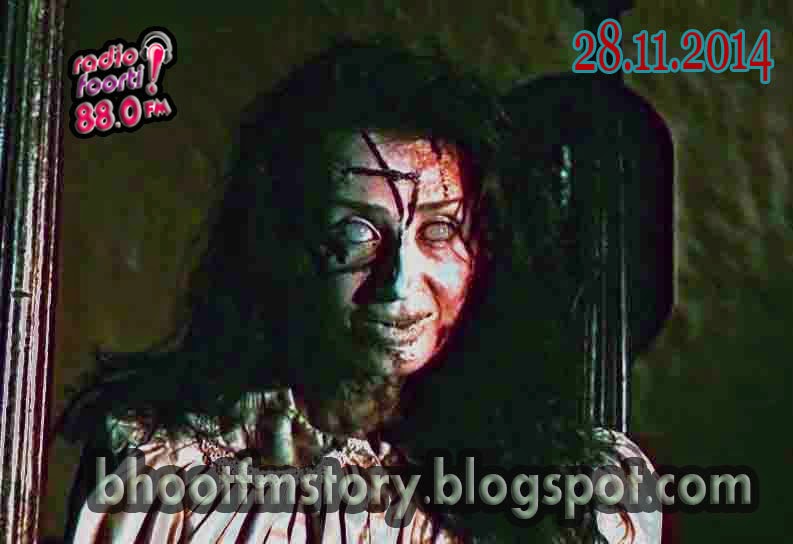
- Bhoot FM[3]
References[edit]
- ^'About Us'. Retrieved 2009-10-15.
- ^'Radio Foorti celebrates a decade in the industry - Dhaka Tribune'.
- ^'Bhoot FM on Facebook'.
External links[edit]
Clone software protection dongle. Coordinates: 23°47′42″N90°24′49″E / 23.795130°N 90.413659°E